
Why Is My Upstairs So Much Hotter (or Colder) Than Downstairs?
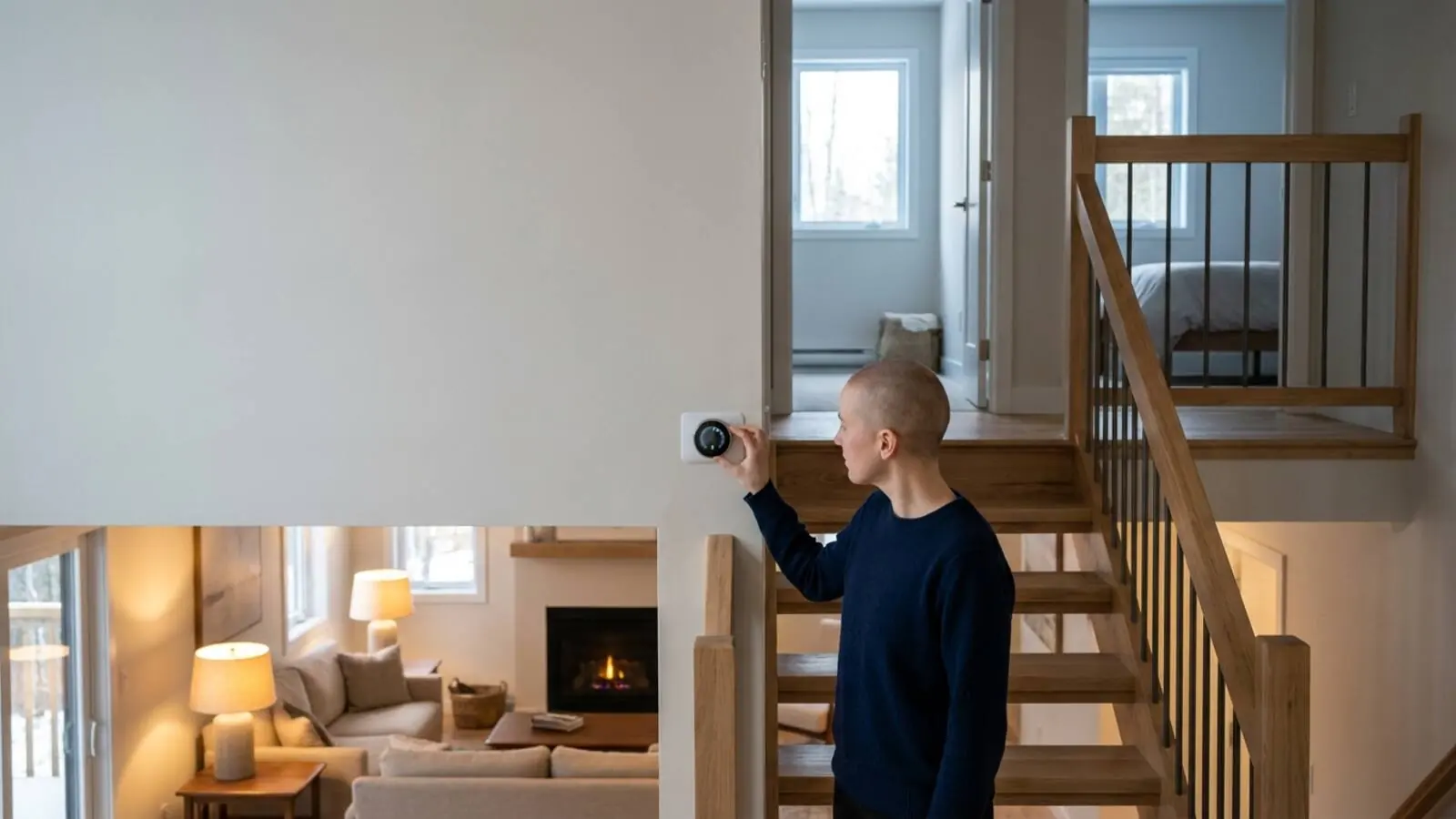
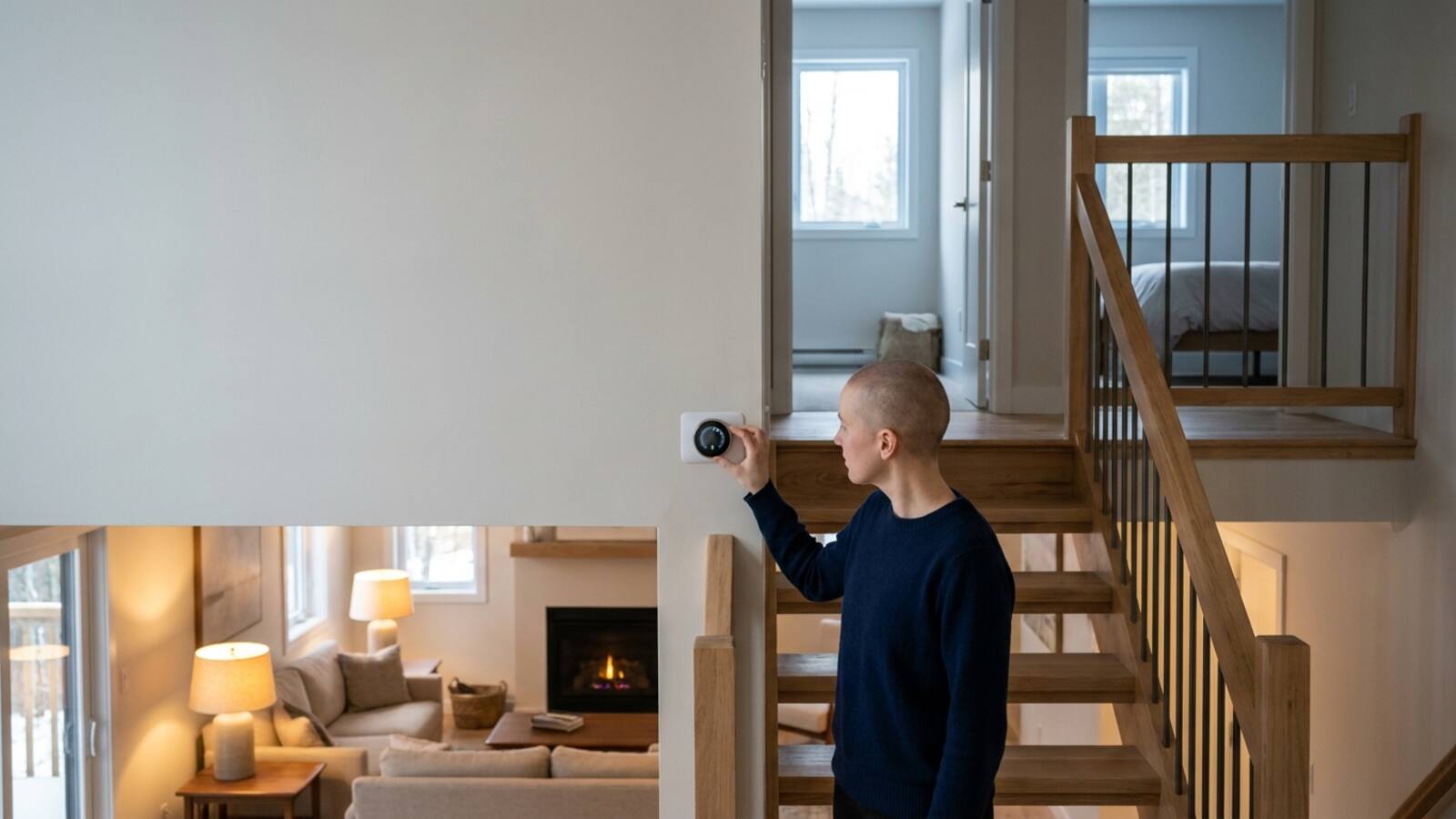
It comes down to physics before it comes down to equipment. Warm air is lighter than cool air, so in any two-story house it rises and collects near the ceiling of the highest floor — the same reason a stairwell feels warm at the top and cool at the bottom. Most homes with this complaint also run one central thermostat, almost always mounted downstairs in a hallway or living room, controlling a single ducted furnace or heat pump system for the whole house. That thermostat can only respond to the temperature where it's sitting. If it reads 70°F downstairs and shuts the system off, the upstairs bedrooms it can't see may already be sitting at 76°F or higher.
In winter, the same stack effect works in reverse for comfort, if not for temperature. Cold air is denser and settles low, so even when the whole house is nominally at temperature, downstairs rooms near exterior doors and windows often feel drafty and cool while upstairs bedrooms feel stuffy and overheated from rising warm air. It's the same root cause showing up as opposite complaints depending on the season.
What's Actually Causing This in Puget Sound Two-Story Homes Specifically?
We see this constantly in the 1970s–2000s two-story colonials and split-entries that make up a lot of the housing stock across King, Pierce, and Thurston counties. Most were built with a single ducted system and one return duct pulling air back from the main floor, with supply registers upstairs sized for heating more than for the cooling loads a modern household actually puts on a house — more electronics, more people working from home, bonus rooms converted to offices and gyms. Add an under-insulated attic, which is common in homes from that era, and the ceiling of the top floor absorbs real heat on our warmer summer days even though Western Washington's marine climate keeps us mild compared to most of the country.
South- and west-facing bonus rooms over garages are the single most common "hot room" call we get, for a simple reason: they have a ceiling exposed to attic heat on top and often a wall exposed to afternoon sun on the side, with no dedicated return to pull that heat back out. A ductless mini-split or improved ductwork fixes the room; a bigger central system doesn't, because the problem isn't a lack of total capacity, it's where that capacity is going.
What Are the Real Fixes for Uneven Temperatures — And What Do They Cost?
There's a real range of options here, and the right one depends on what's actually driving the imbalance in your house. Here's what each option costs installed in the Puget Sound region in 2026:
| Fix | Installed Cost |
|---|---|
| Attic air sealing & insulation (reduces heat gain into upstairs) | $1,500 – $4,000 |
| Additional or larger return duct (improves airflow balance) | $500 – $2,000 |
| Motorized zoning dampers (rebalances existing ductwork) | $2,000 – $5,000 |
| Single-zone mini-split (dedicated capacity, one room) | $8,000 – $9,500 |
| Multi-zone mini-split (dedicated capacity, 2–3 rooms) | $10,000 – $12,500 |
Insulation and dampers are worth doing regardless — they're cheaper, and a well-sealed attic makes every other fix work better. But they share a limitation: they can only rebalance the capacity your existing system already has. If that system was never sized to give the upstairs enough airflow in the first place, no amount of damper adjustment fully closes the gap. That's the point where most of our uneven-temperature calls turn into a mini-split conversation.
Tired of Fighting Your Thermostat?
Tell us which rooms run hot or cold and we'll tell you honestly whether ductwork can fix it or whether a dedicated zone is the real answer — just the actual diagnosis.
Why Is a Single-Zone Mini-Split Usually the Best Fix for the Hot Room Upstairs?
A ductless mini-split solves the actual problem instead of working around it. One outdoor unit connects to one indoor wall-mounted head serving just the room that's out of balance, with its own thermostat and its own dedicated heating and cooling capacity that has nothing to do with what the rest of the house's system is doing. The main floor thermostat keeps running the downstairs the way it always has, and the problem room finally gets treated as its own zone instead of an afterthought at the end of a duct run.
It also installs alongside your existing furnace or ducted heat pump rather than replacing it — no need to touch a system that's otherwise working fine for the rest of the house. Mitsubishi, Daikin, and Hitachi units, the three brands we install, run quietly enough that most homeowners forget the indoor head is on.
Do I Need to Rezone My Whole Duct System, or Just Fix the Problem Room?
Almost always just the room, or at most a couple of rooms. In our experience across the homes we've serviced from Federal Way to Tacoma to Olympia, "the whole upstairs is hot" usually turns out to be one or two specific rooms — the primary bedroom, a bonus room over the garage, a home office — pulling the average down for everyone. Full duct system rezoning with dampers throughout the house is a bigger, more invasive project, and it's rarely the right first move unless a home inspection turns up ductwork that's genuinely undersized or leaking throughout. We check your actual ducts as part of every estimate before recommending anything, rather than assuming the bigger, more expensive fix is the right one.
Do PSE Rebates Apply to a Zoning Fix Like This?
Sometimes, and it depends on what the room is currently using for heat. If you're converting an electric baseboard heater or wall unit in that room to a qualifying ductless heat pump, that's the textbook case for Puget Sound Energy's $2,400 electric-resistance conversion rebate. Adding a mini-split zone to a room already served by a working gas furnace or ducted heat pump — the more common scenario for a hot upstairs bedroom — typically falls under PSE's standard new-installation rebate of up to $1,200 instead. Not every city we serve is on Puget Sound Energy; a handful of cities in our service area run on Tacoma Power, Seattle City Light, or smaller utilities with their own programs, so we confirm which utility and rebate actually apply to your address before quoting a number. As of April 2, 2026, PSE requires rebate-eligible installs to come from a PSE-certified installer, which Varsity is, and the federal 25C tax credit ended December 31, 2025 and no longer applies to any 2026 project.
What Does Installation Day Look Like for a Zoning Fix?
For a single-zone install, most jobs are done in 4 to 6 hours — the indoor head mounts on the wall, the outdoor unit sits on a small pad or bracket, and the refrigerant line runs between them through one small hole, with no ductwork to open up and no drywall repair. Multi-zone installs covering two or three rooms typically take a full day. We pull the required mechanical permit on every job, and every installation carries our 10-year parts and labor warranty.
One thing we hear a lot from homeowners who call about a hot upstairs room: they expected us to push the biggest, most expensive system available. As one recent customer put it: "Extremely friendly and honest. Offered valuable advice even though we didn't end up hiring them for that particular job." — Minyoung J., Federal Way. Sometimes a $2,000 duct fix really is the right call. When it isn't, a dedicated mini-split zone is the honest answer, and we'll tell you which one your house actually needs.
Budget $8,000–$9,500 for a single-zone fix or $10,000–$12,500 if two or three rooms need their own zone, and get a real diagnosis before you spend on any of it. Call (253) 785-4622 or get a free estimate to find out what's actually going on in your house.
Uneven Temperature FAQs
Heat naturally rises, so warm air pools upstairs while cooler air settles downstairs, and that stack effect is worse in homes with a single thermostat on the main floor controlling the whole house off one reading. Undersized return ducts feeding the second floor, more direct sun on upstairs bedrooms, and heat trapped in an under-insulated attic all add to the gap. In winter, the same stack effect works in reverse for cold air near the floor, which is why downstairs can feel chilly even when the thermostat reads comfortable.
Attic air sealing and insulation upgrades, typically $1,500 to $4,000, are usually the cheapest fix and help every case since they reduce how much heat the upstairs absorbs in the first place. Motorized zoning dampers added to existing ductwork run $2,000 to $5,000 and can rebalance airflow between floors, but they only work as well as the ductwork already installed. Neither one is a guaranteed full fix on its own, which is why most homes that call us have already tried the cheap options before booking an estimate.
For most Puget Sound two-story homes, yes, because a ductless mini-split gives the problem room or floor its own dedicated heating and cooling capacity instead of sharing airflow and a single thermostat with the rest of the house. A single-zone unit in the worst upstairs bedroom typically runs $8,000 to $9,500 installed, while a multi-zone system covering two or three rooms runs $10,000 to $12,500. It works alongside your existing furnace or ducted heat pump rather than replacing it.
In most cases we evaluate, a mini-split is simpler and more reliable than retrofitting zoning dampers into existing ductwork, because it doesn't depend on how well that ductwork was originally sized or sealed. Damper-based zoning can work well when the ducts themselves are in good shape and oversized enough to handle rebalanced airflow, but that's the exception more than the rule in older Puget Sound homes. We check your actual ductwork during a free estimate before recommending either option.
It depends on what the room currently has. If you're converting an electric baseboard or wall heater in that room to a qualifying ductless heat pump, Puget Sound Energy's electric-resistance conversion rebate of up to $2,400 typically applies. Adding a mini-split zone to a room served by an existing gas or ducted heat pump system usually qualifies for PSE's standard new-installation rebate of up to $1,200 instead. Not every city we serve is on PSE, so we confirm which utility and rebate apply to your address before quoting a number. The federal 25C tax credit ended December 31, 2025, and no longer applies to any 2026 installation.