
Why Do Garages, ADUs, and Bonus Rooms Get Left Out?
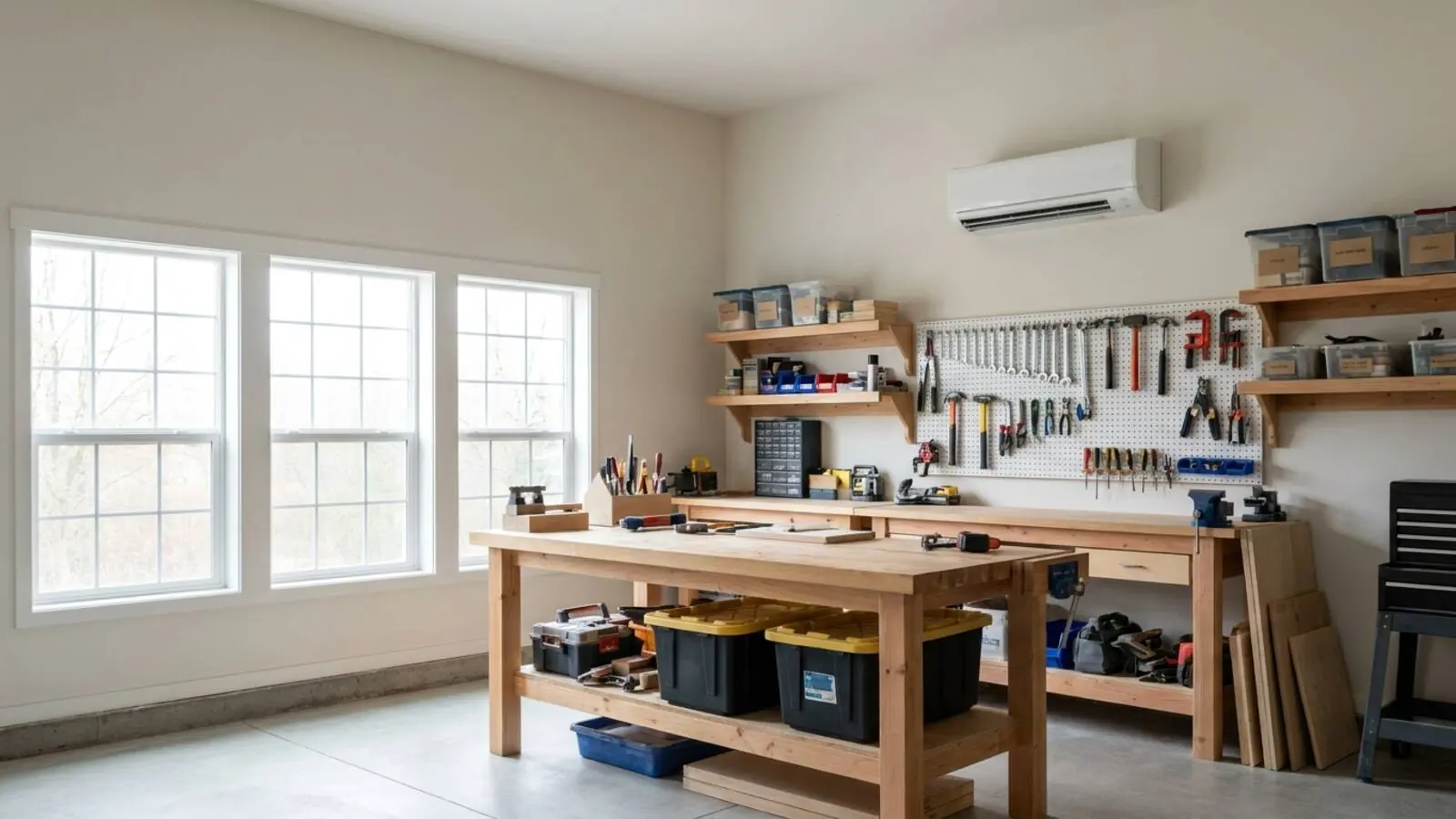
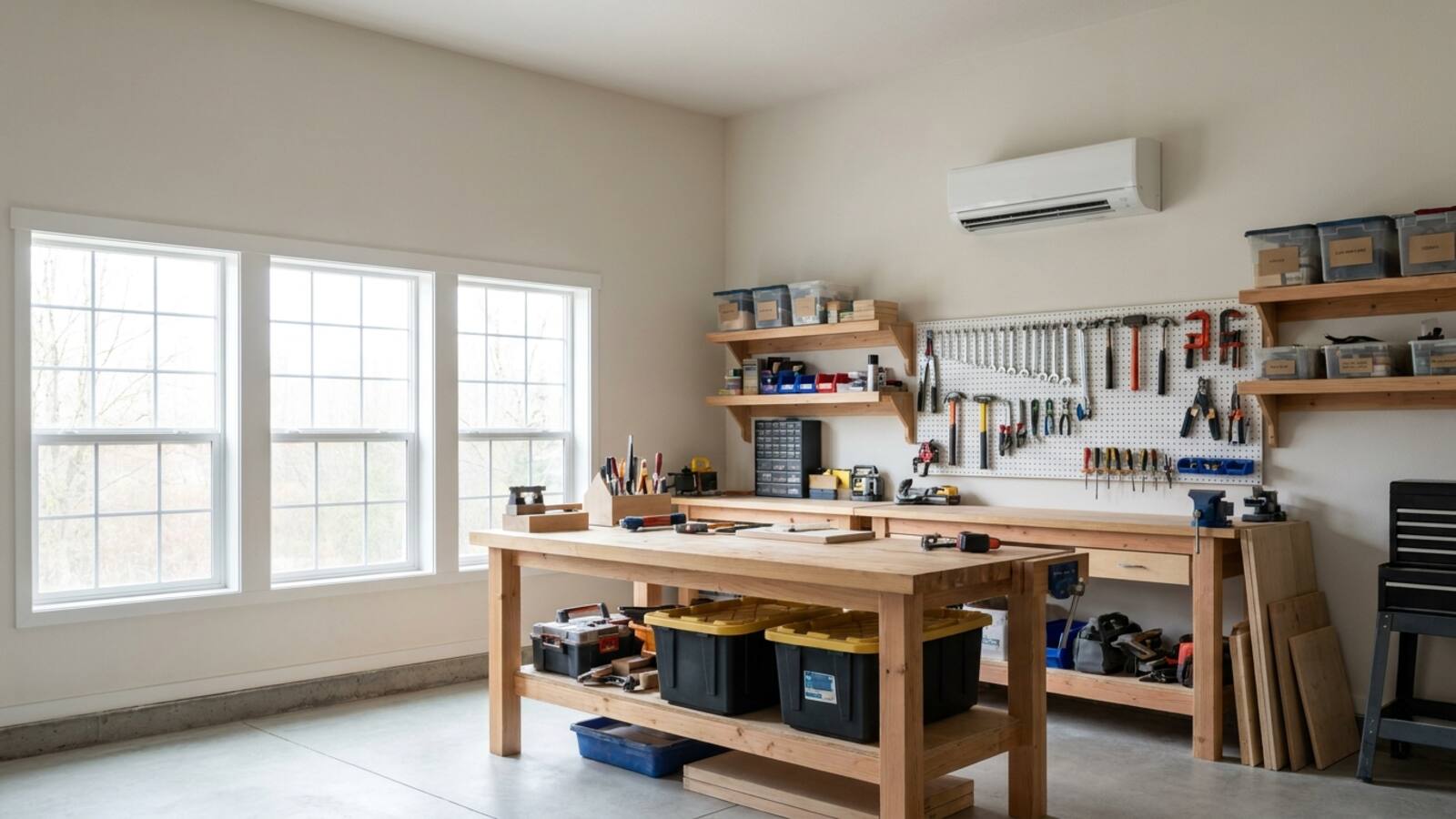
Every Puget Sound home seems to have one. A garage that turned into a workshop or home gym. An accessory dwelling unit built for a parent, a renter, or an adult kid who's not quite ready to leave. A bonus room over the garage that's either an oven in July or an icebox in January. None of them were part of the original heating plan, and running new ductwork to reach them means tearing into finished walls and ceilings for one room — a project most homeowners rightly refuse to take on.
A ductless mini-split solves this cleanly because it doesn't need ducts at all. One outdoor compressor connects to one indoor wall-mounted head through a three-inch hole and a refrigerant line, and that's the whole distribution system. It's the same reason mini-splits work so well in older craftsman homes throughout Tacoma and Federal Way that were never built with ducts — the logic is identical for a garage or an ADU that simply doesn't have any system to extend.
How Much Does It Cost to Add a Mini-Split to a Garage or ADU?
Here's the honest range, and what moves you up or down within it:
| Space | Typical Setup | Installed Price |
|---|---|---|
| Garage or workshop | Single zone, one indoor head | Toward $8,000 |
| Bonus room over garage | Single zone, one indoor head | $8,000 – $10,000 |
| Studio ADU, one main room | Single or dual zone | $9,000 – $12,000 |
| Full ADU, multiple rooms | Multi-zone, 2–4 indoor heads | Toward $14,000 |
Premium markets like Bellevue and Gig Harbor run higher across the board, typically $9,500–$19,000 for the same setups, driven by larger detached structures and higher-tier equipment selections. Every Varsity quote comes in Good, Better, and Best tiers so you can see exactly what a step up in equipment buys before you commit. For the full breakdown of what drives ductless pricing house-wide, see our mini-split cost guide.
Can One Indoor Unit Really Heat and Cool a Garage?
Yes — with one condition that matters more than the equipment: the garage has to be insulated first. A mini-split is sized to how much heat a space gains and loses, not to its square footage alone, and an uninsulated garage with a standard steel roll-up door loses heat almost as fast as leaving a window open. Install a correctly sized unit in that space and it will run constantly, wear out early, and still feel drafty near the door.
Insulate the walls, ceiling, and garage door first — even a basic upgrade makes a real difference — and a single-zone unit in the 9,000 to 12,000 BTU range comfortably handles a typical two-car garage. Smaller one-car garages or well-sealed workshops can run on less; larger detached shops or garages with high ceilings may need more. We run an actual load calculation during your free estimate rather than guessing off square footage, the same process we use for sizing any heat pump in a Puget Sound home.
Get the Real Number for Your Space
Garage, ADU, or bonus room — tell us about it and get a genuine estimate in about 60 seconds, or book a free in-home visit and we'll size it properly on site.
What Makes an ADU Different From a Simple Garage Conversion?
An accessory dwelling unit is a legal dwelling, not just a conditioned space, and that changes the project in two ways. First, it usually needs more than one zone — a bedroom, a living area, and sometimes a separate kitchen space each want independent temperature control, which points toward a multi-zone system with 2 to 4 indoor heads rather than a single unit. Second, an ADU typically needs its own electrical sub-panel anyway to cover the kitchen, water heater, and other loads a habitable dwelling requires under Washington building code — and once that sub-panel is in place, adding mini-split circuits to it is a modest addition rather than a standalone electrical project.
If you're building the ADU from scratch, the smart move is looping in your HVAC contractor during the electrical planning phase, not after the panel is already closed up. Retrofitting a mini-split circuit into a finished ADU is doable but costs more than wiring it in during construction.
What Do Bonus Rooms Over the Garage Need Differently?
The room above the garage — a fifth bedroom, a media room, a home office — is one of the most common uneven-temperature complaints we hear across the Puget Sound region, and it's rarely the mini-split's fault when one gets added but still underperforms. These rooms usually sit above an unconditioned garage ceiling and often share exterior walls on three sides, so they lose and gain heat faster than a room with conditioned space below and beside it. A correctly sized single-zone mini-split handles this well, but sizing has to account for that extra exposure, not just the square footage of the room itself — another reason we measure rather than estimate. For homes fighting this same problem on a whole-floor scale, our mini-split vs. central heat pump guide covers the broader zoning fix.
What Electrical Work Does a Garage or ADU Mini-Split Need?
Every mini-split zone needs its own dedicated 208/230-volt circuit — it doesn't share a circuit with garage door openers, outlets, or shop equipment. For a single-zone garage or bonus room unit, that's typically a straightforward addition if your main panel has an open breaker slot and enough spare capacity, which we verify during the estimate rather than assuming. Multi-zone ADU systems draw more total power and are more likely to need either a subpanel or confirmation that the existing panel can handle the added load alongside everything else in the house.
This is also where garage conversions most often stall out mid-project: a homeowner buys the mini-split, then discovers the panel is already full. We check this upfront, before you're quoted a number, so there are no surprises once the crew shows up.
Do I Need a Permit for This?
Yes. Washington requires a mechanical permit for any mini-split installation, garage, ADU, or otherwise, and it's not a formality to skip — it's what confirms the electrical and refrigerant work was done to code, and it's what keeps the installation covered under warranty if something goes wrong down the line. ADU projects typically already involve a building permit for the occupancy change itself, with the mechanical permit for heating and cooling handled as part of that broader approval. Varsity pulls the required permits on every installation we do; a contractor who offers to skip this step to save time is cutting a corner that's designed to protect you.
Do Utility Rebates Apply Here?
Sometimes, and it depends entirely on what the space is replacing. If you're converting an old electric baseboard heater or wall unit in a bonus room to a qualifying ductless heat pump, that's the textbook case for an electric-resistance conversion rebate from your local utility. A garage or ADU that never had a heating system before generally doesn't qualify for that kind of rebate, since there's no existing resistance-heat system to convert away from. Programs and eligibility change, so we confirm what your own utility actually pays and file the paperwork either way — and because rebate programs only pay out through their own approved contractor networks, we check the current requirements for your address before quoting rather than after. One thing that no longer applies regardless of the project: the federal 25C tax credit ended December 31, 2025.
What Does Installation Day Actually Look Like?
For a single-zone garage or bonus room unit, most installs are done in 4 to 6 hours — the indoor head mounts on the wall, the outdoor unit sits on a small pad or wall bracket outside, and the refrigerant line runs between them through one small hole. Multi-zone ADU installs with several indoor heads typically take a full day. Either way, it's one of the least disruptive HVAC projects there is: no ductwork to open up, no drywall repair, and in most cases, the rest of the house is untouched while the crew works.
We're an owner-operated crew — the people who size and install your system are the same people whose names are on the invoice. From a real review: "The installation went very smoothly from start to finish and their craftsmanship is phenomenal." — Oscar B., Federal Way. That's the standard whether it's a whole-house system or one garage conversion.
We run estimates and installs Monday through Friday, 8:00 AM to 6:00 PM, and every install carries a 10-year parts and labor warranty. If you're ready to turn that garage, ADU, or bonus room into a space you'd actually spend time in, call (253) 785-4622 or get a free estimate.
Garage & ADU Mini-Split FAQs
A single-zone mini-split for a garage, workshop, or bonus room typically lands at the lower end of the $8,000 to $14,000 Puget Sound installed range, since one indoor head and one small outdoor unit is the simplest ductless configuration. The final number depends on insulation, wall construction, how far the outdoor unit sits from the electrical panel, and whether the space already has adequate wiring. Premium markets like Bellevue or Gig Harbor run closer to $9,500 to $19,000.
Yes, but only if the garage is insulated. A mini-split is sized to the heat gain and loss of the space, not just its square footage, and an uninsulated garage loses heat too fast for any system to keep up efficiently. Insulate the walls, ceiling, and garage door first, then a correctly sized single-zone unit — often 9,000 to 12,000 BTU for a typical two-car garage — will heat and cool it as reliably as any room in the house.
Not always for the mini-split alone. A single mini-split zone typically needs one dedicated 208/230-volt circuit, which an existing panel can often supply if it has spare capacity. Full ADUs usually need a sub-panel anyway to cover the kitchen, water heater, and other loads required for a legal dwelling unit — and once that sub-panel exists, the mini-split circuit is a small addition to it. We check your panel's available capacity during the free estimate before quoting a number.
Yes. Washington requires a mechanical permit for mini-split installation, and an ADU conversion typically already involves a building permit for the occupancy change, with the HVAC covered under its own mechanical permit. Varsity pulls the required permits as part of every installation, which also protects the work under our 10-year parts and labor warranty.
It depends on what the space is replacing. If you're converting an electric baseboard or wall heater to a qualifying ductless heat pump, that's the classic case for a local utility conversion rebate. A garage or ADU that never had heat before typically doesn't qualify, since there's no existing electric resistance system to convert from. Programs change, so we confirm current eligibility and handle the paperwork either way.