
Why Doesn't Square Footage Alone Determine Heat Pump Size?
It's the question almost every homeowner starts with, and the honest answer is that square footage is only one input among many. Two 2,000 sq ft homes in the same neighborhood can need meaningfully different equipment. A single-story rambler from the 1970s with aluminum single-pane windows and minimal attic insulation loses heat far faster than a 2015-built two-story with modern double-pane glass and code-current insulation — even though they're the same size on paper.
A contractor who quotes your heat pump installation off square footage alone, or off "what the old unit was," is guessing. It's a fast way to write an estimate, but it's not how the equipment actually gets matched to the home. The right process runs the numbers on your specific house.
What Is a Manual J Load Calculation?
A Manual J is the industry-standard method (developed by the Air Conditioning Contractors of America) for calculating exactly how much heating and cooling capacity a home needs. Instead of a square-footage rule of thumb, it accounts for:
- Square footage and ceiling height — the actual volume of air being conditioned.
- Insulation levels in the walls, attic, and floor.
- Window count, size, and orientation — south- and west-facing glass adds heat gain in summer.
- Air infiltration — how tight or leaky the home's envelope is.
- Number of occupants and typical usage patterns.
- Local climate data for the Puget Sound region specifically.
The output is a precise BTU-per-hour figure for heating and cooling, which then maps to a tonnage recommendation for your ducted heat pump or mini-split system. It's a calculation, not a guess — and every Varsity free estimate includes one.
What Size Heat Pump Do Most Puget Sound Homes Need?
With the caveat that a real load calculation is the only way to confirm your number, here's a general starting range for typical Puget Sound homes with average-to-decent insulation:
| Home Size | Typical Tonnage | BTUs Per Hour |
|---|---|---|
| Under 1,000 sq ft | 1.5 tons | 18,000 BTU |
| 1,000 – 1,500 sq ft | 2 tons | 24,000 BTU |
| 1,500 – 1,800 sq ft | 2.5 tons | 30,000 BTU |
| 1,800 – 2,200 sq ft | 3 tons | 36,000 BTU |
| 2,200 – 2,600 sq ft | 3.5 – 4 tons | 42,000 – 48,000 BTU |
| 2,600 – 3,200 sq ft | 4 – 5 tons | 48,000 – 60,000 BTU |
Treat that table as a starting point for the conversation, not a final answer. An older Tacoma craftsman with knob-and-tube wiring and no wall insulation and a newer Auburn build of the same square footage can land on different rows of that chart. Our full breakdown of installed pricing by system type is in the heat pump cost guide.
What Happens When a Heat Pump Is Too Big for the Home?
"Bigger is safer" is the instinct, but an oversized heat pump creates real problems. It reaches the thermostat setting quickly, then shuts off — a pattern called short-cycling. Short-cycling means the system never runs long enough to properly dehumidify the air, so the home can feel clammy even at the right temperature. It also means the compressor starts and stops far more often than it should, which is exactly the kind of strain that shortens a system's life and drives up repair calls down the road. An oversized system also costs more to buy upfront for capacity you'll never actually use.
What Happens When a Heat Pump Is Too Small for the Home?
The opposite mistake is just as costly. An undersized heat pump runs almost continuously, trying to keep up, and still may not reach the thermostat setting on the coldest winter mornings or hottest summer afternoons. It works harder on every single cycle, which drives up energy bills and puts sustained stress on the compressor — often shortening the system's life from the other direction. Comfort suffers year-round, not just on extreme days.
Get a Real Load Calculation, Not a Guess
Every Varsity free estimate includes a Manual J calculation for your actual home — not a square-footage rule of thumb. You get the size the calculation says, not a size up.
Are Mini-Splits Sized the Same Way as Ducted Systems?
Not quite. A ducted heat pump is sized once for the whole home's total heat loss and heat gain. A ductless mini-split is sized zone by zone — each indoor head is matched to the specific room or open area it's serving. This is where we see the most common sizing mistake with mini-splits: a homeowner tries to cover a large open-concept living and dining space with a single head sized for a bedroom, and it never quite keeps up. Get the zone breakdown right, and mini-splits are excellent at matching capacity to exactly where it's needed — see real installed numbers by zone count in our mini-split cost guide.
What Other Factors Change the Sizing Beyond Square Footage?
Past the basic size-versus-tonnage chart, a handful of home-specific details can shift the recommendation up or down:
- Ceiling height. Vaulted ceilings and great rooms add volume that square footage alone doesn't capture.
- Window count and orientation. A wall of west-facing glass adds significant summer heat gain.
- Age and condition of insulation. Older homes without modern attic and wall insulation lose heat faster.
- Ductwork condition. Leaky or undersized ducts can undermine even a correctly sized system — sometimes the fix is duct work, not a bigger unit.
- Sun exposure and shading. Mature trees or a home's orientation on the lot change how much heat the structure absorbs.
- Coastal exposure. Homes near Puget Sound's shoreline face added wind-driven heat loss that inland homes don't.
How Do You Get an Accurate Size for Your Home?
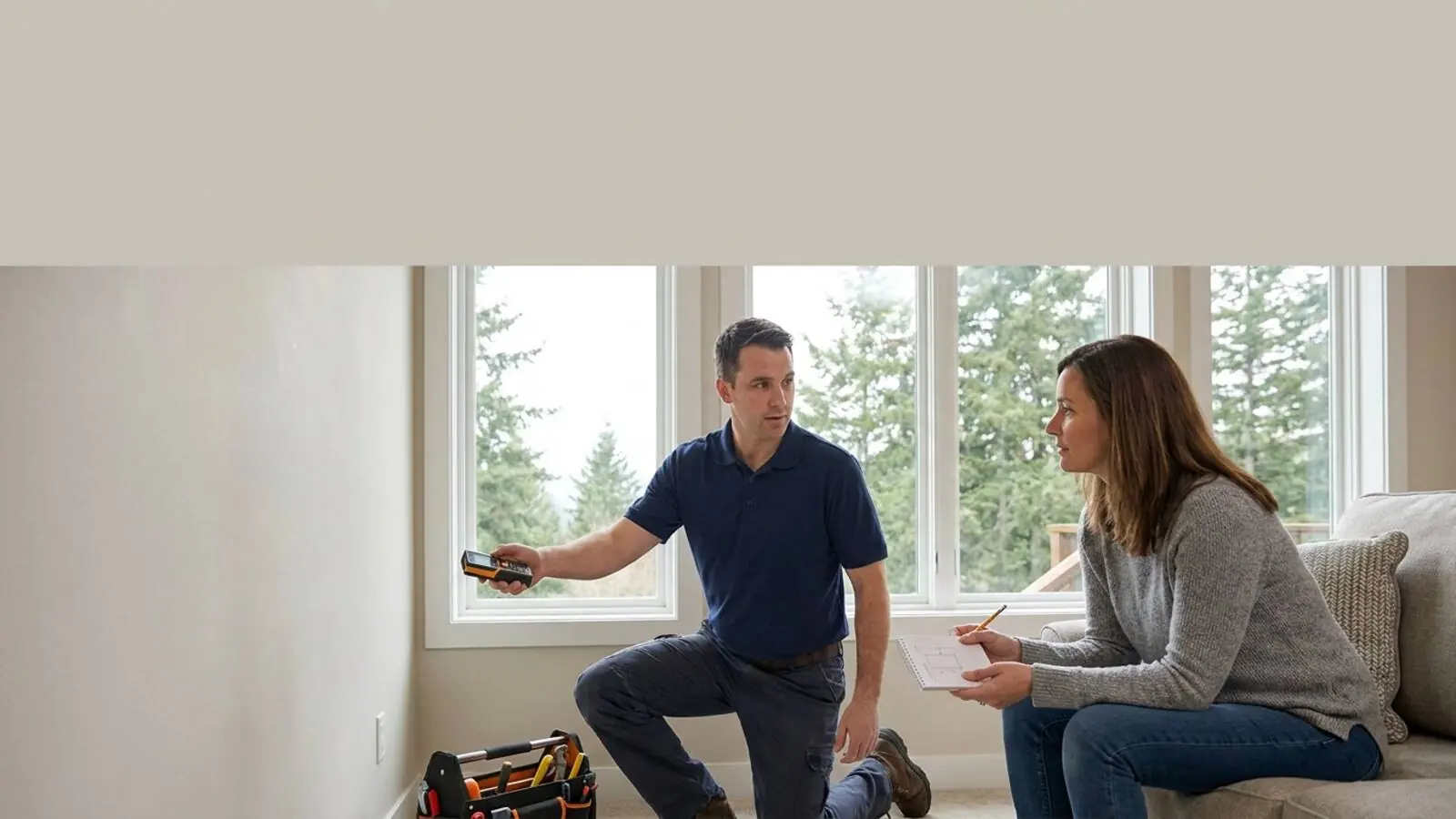
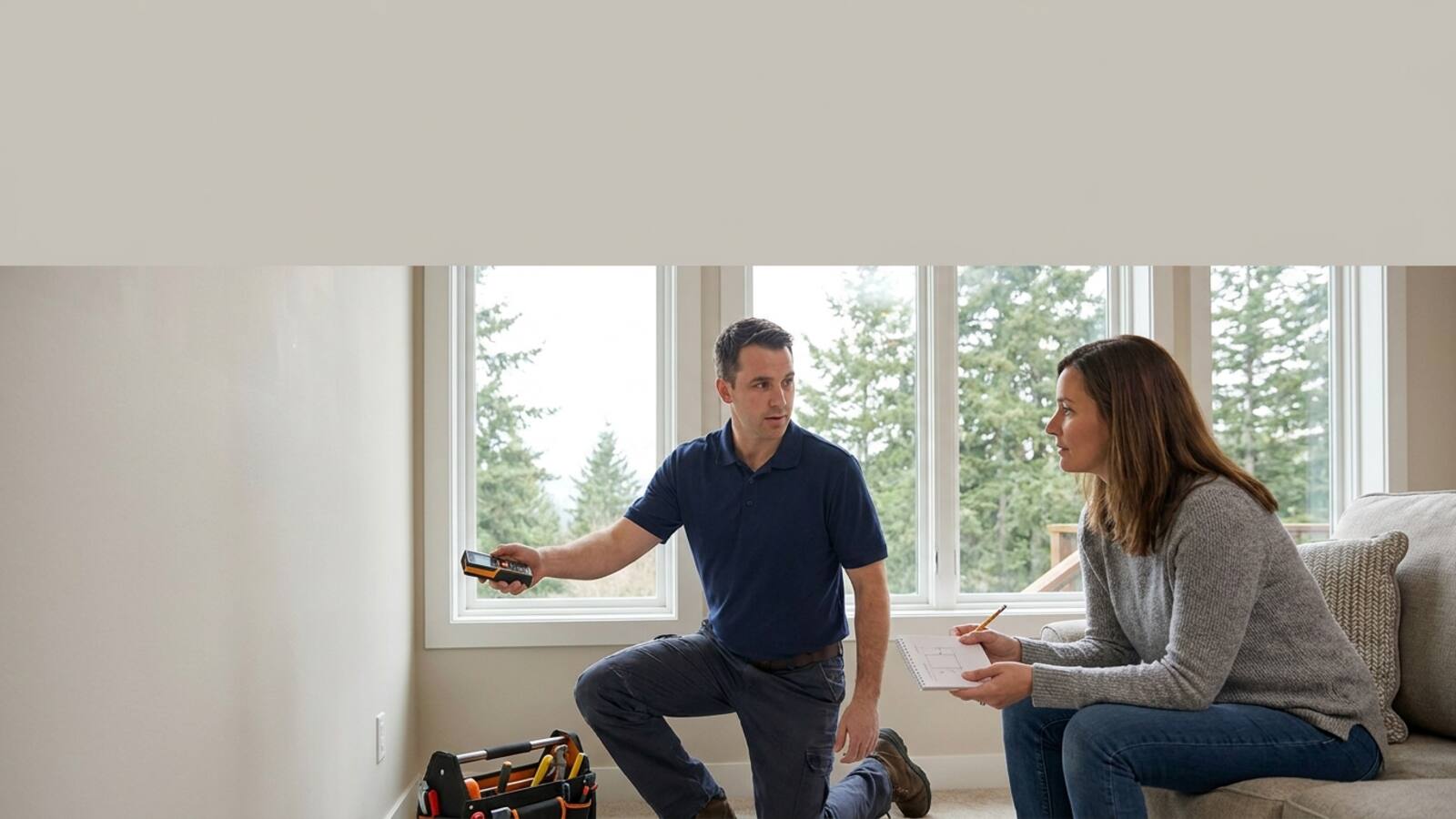
The short answer: have someone actually calculate it. A qualified installer walks the home, measures the relevant details, and runs the Manual J numbers rather than eyeballing a square-footage chart or matching whatever size was there before. Every Varsity Heating estimate includes this at no extra cost, whether you're looking at a ducted heat pump or a mini-split system. You'll walk away with a specific tonnage recommendation for your home, Good/Better/Best equipment options at that size, and a straight answer if a smaller or larger unit than you expected is actually the right call.
Heat Pump Sizing FAQs
Most 2,000 sq ft Puget Sound homes need a 3- to 3.5-ton heat pump (36,000-42,000 BTUs), but that's a starting point, not a final answer. A newer, well-insulated 2,000 sq ft home can need less capacity, while an older home with single-pane windows or minimal insulation can need more. The only way to confirm the right size is a Manual J load calculation, which we include with every free estimate.
An oversized heat pump short-cycles — it turns on, blasts the room to temperature fast, and shuts off again, leaving the house feeling clammy and unevenly heated or cooled. An undersized heat pump runs almost constantly and still struggles to hit the thermostat setting on the coldest or hottest days. Rooms that are noticeably harder to heat or cool than others, high indoor humidity, and unusually high energy bills are all signs the sizing may be off.
No — this is one of the most common misconceptions in HVAC. An oversized heat pump costs more upfront, short-cycles instead of running steady comfortable cycles, does a worse job removing humidity, and wears out its compressor faster from constant starting and stopping. The right size is the one that matches your home's actual heat loss and heat gain, not the biggest unit that will fit on the pad.
Yes. A ducted heat pump is sized once for the whole home's total heat loss and gain. A ductless mini-split is sized room by room or zone by zone, since each indoor head is matched to the specific space it serves. Undersizing a single zone is a common mistake when homeowners try to cover a large open room with a head meant for a bedroom.
Correct sizing doesn't change the price range — most Puget Sound homes still pay $12,000 to $18,000 installed for a ducted heat pump, or $8,000 to $14,000 for a ductless mini-split, with premium markets running higher. What correct sizing changes is whether that investment performs well and lasts. Every Varsity estimate includes a real load calculation at no extra cost, so the number you're quoted is for equipment that actually fits your home.