
What Is a Hybrid Heat Pump System, Really?
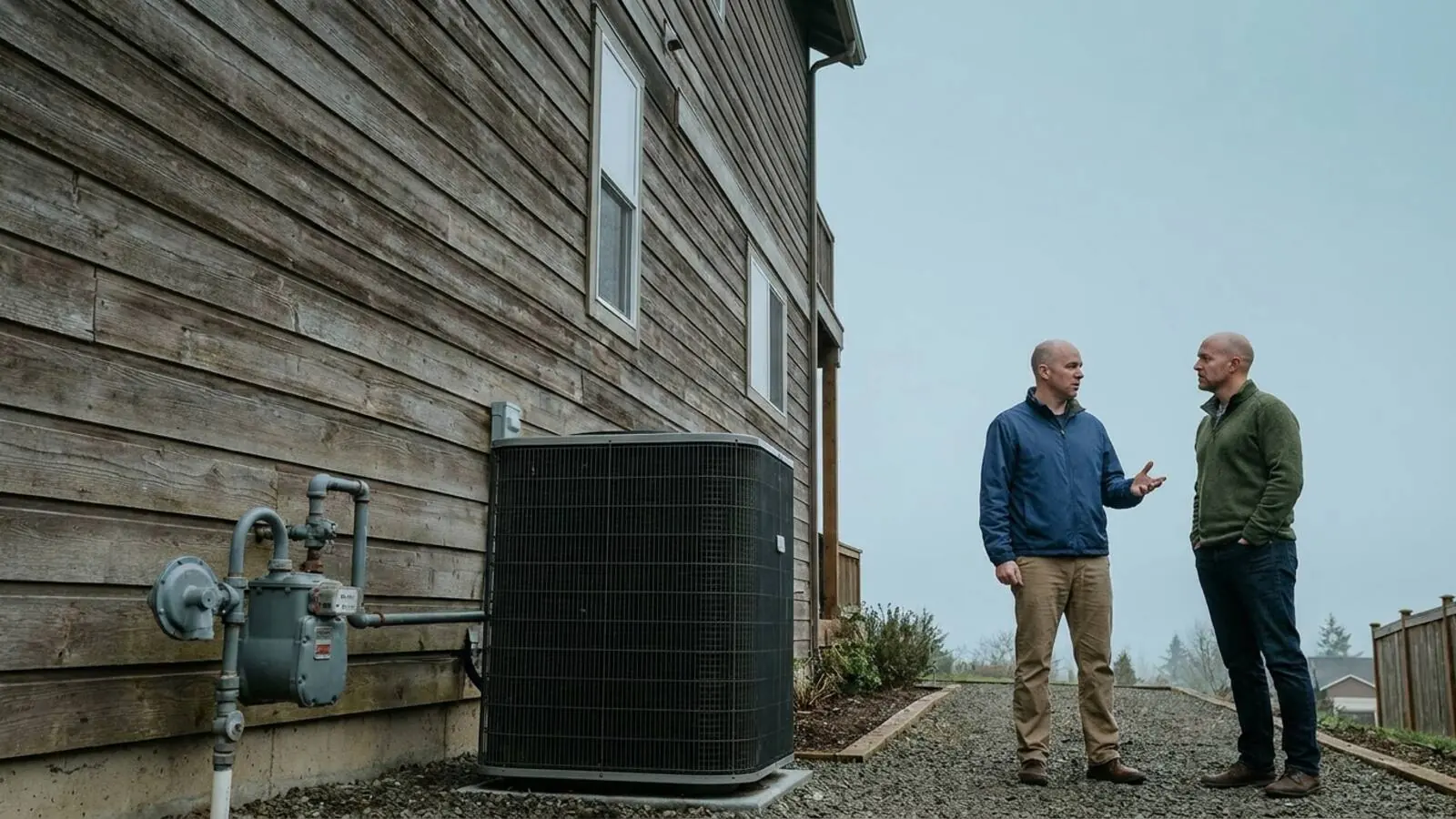
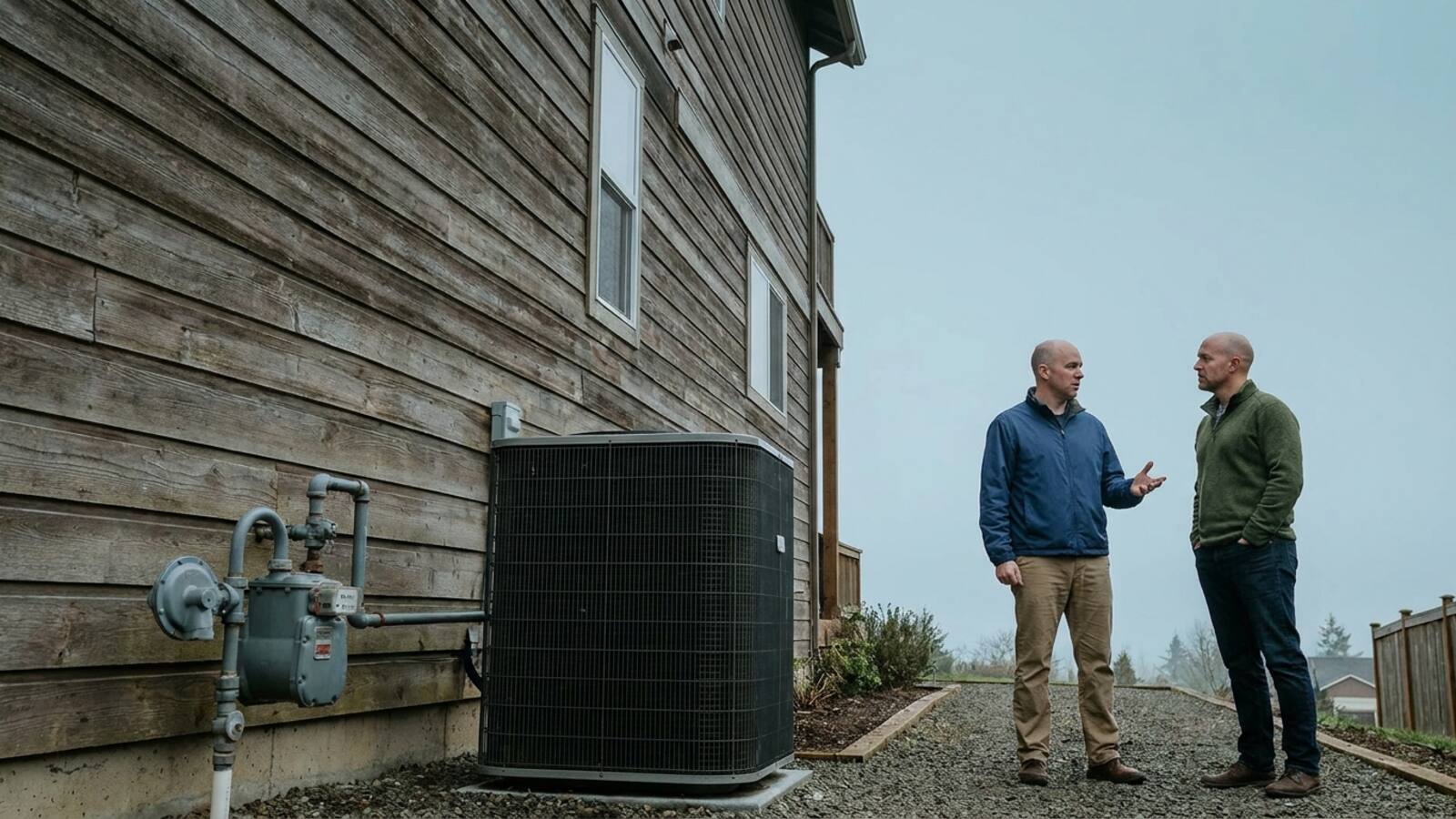
A hybrid — also called dual-fuel — system pairs a heat pump with your existing gas furnace and lets the two share the work automatically. The heat pump handles roughly 90% of your heating hours and all of your cooling, since it's the more efficient system for the vast majority of Puget Sound weather. Once outdoor temperatures drop past a changeover point you set during installation, the system switches to the gas furnace on its own. No app, no thermostat fiddling, no remembering to flip anything — the controls make the call for you.
It's not an exotic special order. We install hybrids regularly, and for the right home it's a genuinely good answer. The question this post actually answers is which homes that is — because in this climate, the backup half of a hybrid system does a lot less work than most homeowners assume.
How Often Does the Gas Backup Actually Turn On Here?
Rarely, and that's the part of the pitch that often gets skipped. The Puget Sound region sits in a mild marine climate: typical winter days run in the 40s, typical nights dip into the 30s, and genuine cold snaps — the kind that push a changeover point — show up a handful of times a winter and usually pass in a few days. A furnace sized to catch those days sits idle the rest of the season while the heat pump does essentially all the work.
That's great news if your furnace is already paid for and healthy — you get a rarely-used insurance policy at no extra equipment cost. It's a less obviously great deal if you're weighing whether to install or maintain a second heating system specifically to cover a handful of nights a year. Both of those are true at once, and which one applies to your house is the real decision here.
| Setup | Typical Cost | Best Fit |
|---|---|---|
| Heat pump only | $12,000–$18,000 | Simplest, one system, handles our climate solo |
| Hybrid (existing furnace stays) | $12,000–$18,000 | Furnace is young & healthy, no reason to scrap it |
| Hybrid (new furnace + heat pump) | $16,000–$26,000 | Rare — only when both systems are failing at once |
| Gas furnace only | $4,000–$8,000 | Heating only, no cooling, no rebate eligibility |
When Does Gas Backup Actually Make Sense?
A hybrid earns its keep in a handful of real situations:
- Your gas furnace is young and healthy. If it's mid-life with years of service left, scrapping it to install a heat pump alone throws away working equipment for no real benefit. Let it finish its career as backup while the heat pump takes over daily duty.
- You want the hot-air-blast feel on the coldest mornings. A furnace's supply air runs hotter than a heat pump's, and some people genuinely prefer that on a 28°F morning. That's a fair, honest preference — a hybrid gives you both without compromise.
- You're not ready to go fully electric. A hybrid is a legitimate transition path: run dual-fuel for years, then retire the furnace and go heat-pump-only whenever it finally reaches end of life.
- You're in a colder foothill pocket. Towns pressed against the Cascades — Enumclaw and Buckley are the usual examples — see more freezing nights than Federal Way or Tacoma, so the backup gets used slightly more often there.
Not Sure Which Setup Fits Your House?
Tell us about your current furnace and we'll give you an honest read — heat pump alone, hybrid, or wait — with real Good, Better, Best pricing for your specific home.
When Doesn't Gas Backup Make Sense?
Just as often, the honest answer is skip it:
- Your furnace is old or already failing. Pairing a brand-new heat pump with a furnace that's about to need its own replacement just delays a second bill and adds a second maintenance schedule. Replace both at once or go heat-pump-only.
- You want the simplest system to own. One piece of outdoor equipment, one maintenance visit, one thing that can break — instead of two systems, two filters, and two possible failure points for a backup that fires a few nights a year.
- You don't already have gas service. Running a new gas line solely to install a backup furnace that will rarely turn on is hard to justify on the numbers, in this climate.
- You want the cleanest path to full electrification. If moving off gas entirely is part of the goal — for the ongoing bill, for the rebate picture, or just as a preference — a hybrid keeps a foot in both camps rather than completing the switch.
Does a Hybrid System Protect You During a Power Outage?
No, not on its own — and this is worth being straight about, because it's the reason some homeowners choose a hybrid in the first place. Both halves of a hybrid system need electricity: the heat pump's outdoor unit obviously does, but so does the gas furnace's blower motor and ignition control. Gas supplies the fuel, not the power to run the equipment. When the grid goes down, a hybrid system stops heating for the same reason an all-electric one does. If uninterrupted heat during outages is the actual goal, that requires a generator or battery backup layered on top — a separate purchase, regardless of which heating system is in the house.
What Does a Hybrid System Actually Cost?
When your existing furnace is healthy and stays in place as the backup, a hybrid typically lands in the same $12,000–$18,000 range as a standard ducted heat pump installed alone — you're paying for the heat pump side of the system, not the furnace you already own. If your furnace also needs to be replaced as part of the project — the "rare" row in the table above — expect to add roughly $4,000 to $8,000 for the furnace itself, landing the combined project closer to $16,000–$26,000 depending on your market tier and home size. We break down the full heat pump cost picture in a separate guide if you want the underlying numbers.
How Does This Affect Utility Rebates?
It depends on your setup, and this is one area where we won't guess in your favor. Local utility rebates are paid on the qualifying heat pump conversion itself, and the amount turns on what the heat pump is replacing and what gets installed. Because a hybrid keeps a working gas furnace in the system as backup rather than removing gas heat entirely, whether it qualifies as a "gas conversion" for rebate purposes depends on how your own utility classifies your specific setup — we confirm that as part of every estimate rather than promise a number before we've checked. Rebate programs also pay out only through their own approved contractor networks, and those rules get rewritten, so we check the current requirements for your address before quoting rather than after. One thing that's off the table either way: the federal 25C tax credit ended December 31, 2025 and no longer applies to any heat pump purchase.
How Do You Actually Decide?
Start with the furnace you already have. If it's healthy and mid-life, a hybrid is close to a free option — you add heat pump efficiency without throwing away working equipment. If it's old, ailing, or you've already been quoted a replacement, that changes the math: you're paying for a second system either way, so compare a heat-pump-only install against a hybrid on real numbers before defaulting to "keep the furnace" out of habit. We check your specific furnace's condition, your panel, and your home's layout during a free estimate and quote both configurations side by side, in writing, so the decision is yours to make with real numbers instead of a sales pitch. Every install — heat pump alone or hybrid — carries a 10-year parts and labor warranty, and we run estimates Monday through Friday, 8:00 AM to 6:00 PM. Call (253) 785-4622 or get a free estimate to find out which setup your house actually calls for.
Hybrid Heat Pump FAQs
For most Puget Sound homes, not really — our mild marine winters rarely drop below 25°F, so a heat pump alone handles the entire season without a gas backup. A hybrid is worth the extra complexity mainly if you already have a young, healthy gas furnace you don't want to scrap, or you simply prefer the feel of gas heat on the coldest mornings. If your furnace is old or failing anyway, replacing it outright and running the heat pump alone is usually the simpler, cheaper path.
A hybrid system pairs a heat pump with a gas furnace and lets the two share the work automatically. The heat pump carries roughly 90% of your heating hours plus all of your cooling, and the system switches to the gas furnace on its own once outdoor temperatures pass a set changeover point — no manual switching, no app, no remembering to flip anything.
Rarely. Puget Sound's typical winter lows sit in the 30s, and temperatures rarely drop below 25°F. A hybrid system's gas furnace is built to catch the coldest handful of nights each winter — in most years that's a few days total, not weeks. The rest of the season, the heat pump does the work on its own.
No, not on its own. Both the heat pump's outdoor unit and the gas furnace's blower motor and ignition control run on electricity, so a hybrid system loses heat the same way an all-electric one does when the power goes out. Gas provides the fuel, not the backup power. If uninterrupted heat during outages is the actual goal, that requires a generator or battery backup regardless of which heating system you choose.
When your existing gas furnace is healthy and stays in place as the backup, a hybrid typically costs about the same as a standalone ducted heat pump — $12,000 to $18,000 installed for a standard-tier home, since you're only paying for the heat pump side of the system. If your furnace also needs to be replaced as part of the project, add roughly $4,000 to $8,000 for the furnace itself. We quote both configurations side by side so you can see the real difference in writing.