
How Do Heat Pumps Make Heat When It's Cold Outside?
Here's the part that trips people up: a heat pump doesn't create heat the way a furnace burns gas or a baseboard glows red. It moves heat. Even on a cold morning, outdoor air contains heat energy — a lot of it. The refrigerant inside the outdoor unit absorbs that heat, the compressor concentrates it, and the system releases it inside your home. Your refrigerator does the exact same trick in reverse, every day, without anyone doubting it.
Because it moves heat instead of generating it, a heat pump can deliver two to three units of heat for every unit of electricity it uses. That's the whole reason the efficiency numbers embarrass electric resistance heat — and it's why a properly installed ducted heat pump is the workhorse heating system for most Puget Sound homes.
The catch people have heard about is real but dated: as outdoor temperatures fall, there's less heat to grab, so output declines. Twenty years ago that decline started early enough to matter in a cold climate. Modern variable-speed compressors changed the math. Today's units hold full heating capacity well below freezing, and dedicated cold-climate models keep producing heat below 0°F. Which raises the only question that actually matters for your house: how cold does it really get here?
What Temperatures Do Puget Sound Winters Actually Hit?
Not very cold. The Puget Sound region sits in a mild marine climate — the Sound and the Pacific act like a giant thermal blanket that keeps winter temperatures compressed into a narrow, heat-pump-friendly band. Typical winter days run in the 40s. Typical winter nights dip into the 30s. Genuine cold snaps — the kind that push nights into the 20s — show up a few times a winter and usually last two or three days before the marine air pushes back in.
Here's what that means for a heat pump, band by band:
| Outdoor Temperature | How Often Puget Sound Sees It | What Your Heat Pump Does |
|---|---|---|
| 40°F and above | Most winter days | Runs at peak efficiency — barely working |
| 32–40°F | Typical winter nights | Full heating capacity; defrost cycles become visible |
| 25–32°F | Brief cold snaps, a handful of nights a year | Still full comfort; auxiliary heat on standby |
| Below 25°F | Rare here | Modern units keep heating; cold-climate models are rated below 0°F |
Notice what's missing from that table: any temperature where a modern heat pump stops working. The "heat pumps fail in winter" stories come from places that spend weeks below zero — Minnesota, North Dakota, interior Montana. Even there, cold-climate heat pumps now carry the load. Around here, the debate was settled before it started. Our winters sit almost entirely inside a heat pump's happiest operating range.
What Happens During a Cold Snap?
Every few winters an arctic front slides down and Puget Sound gets a genuinely cold week. Here's what your system does, in order:
- The heat pump keeps heating. Modern inverter-driven units hold their output well below freezing. On a 22°F night your house doesn't know anything unusual is happening — the system just runs longer cycles.
- Auxiliary heat is the insurance policy. Ducted systems include electric backup heat strips that engage automatically if the heat pump ever needs help. Most homeowners go entire winters without them running. They exist for the rare morning that would make the evening news — and they mean your home has a second heat source built in.
- Hybrid systems are the belt-and-suspenders option. If you want gas backup instead of electric — or you already have a gas line and like the idea of a furnace taking over on the coldest nights — a hybrid heat pump pairs the two: heat pump for 95% of the winter, gas furnace for the coldest stretch. We install these, and for some homes they're the right honest answer. The full gas-vs-heat-pump math is in our heat pump vs. gas furnace comparison.
Equipment tier matters here too. We quote every job in Good, Better, and Best options — and one of the things Best-tier equipment buys you is stronger cold-weather output. If your home sits somewhere that sees more freezing nights, that's a conversation worth having before you pick a tier, not after.
Wondering What Your Home Needs?
Tell us about your house and get a real quote with Good, Better, and Best options — including whether a standard heat pump, a cold-climate unit, or a hybrid is the honest fit for your neighborhood.
Why Does Your Heat Pump "Steam" in Winter?
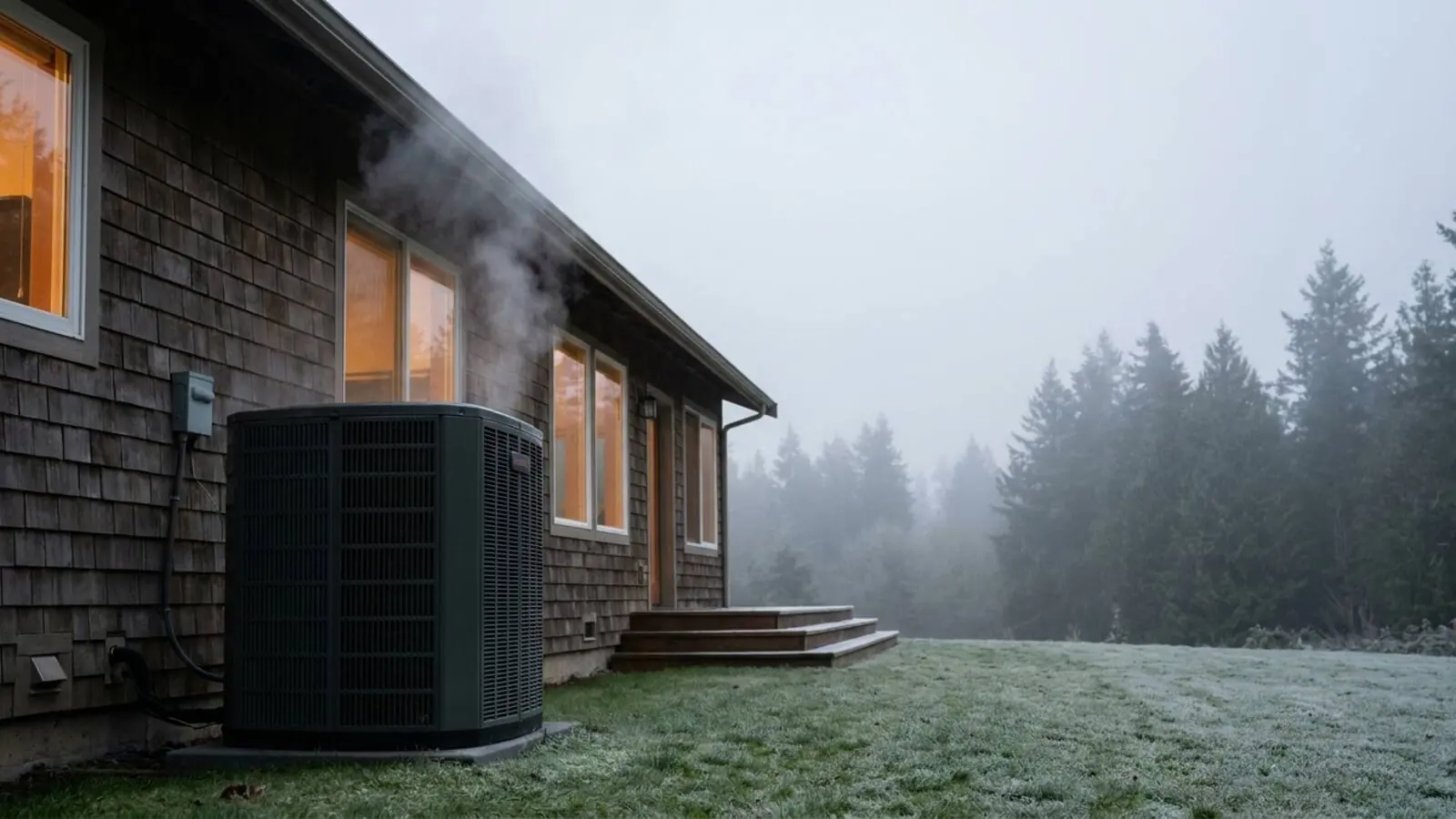
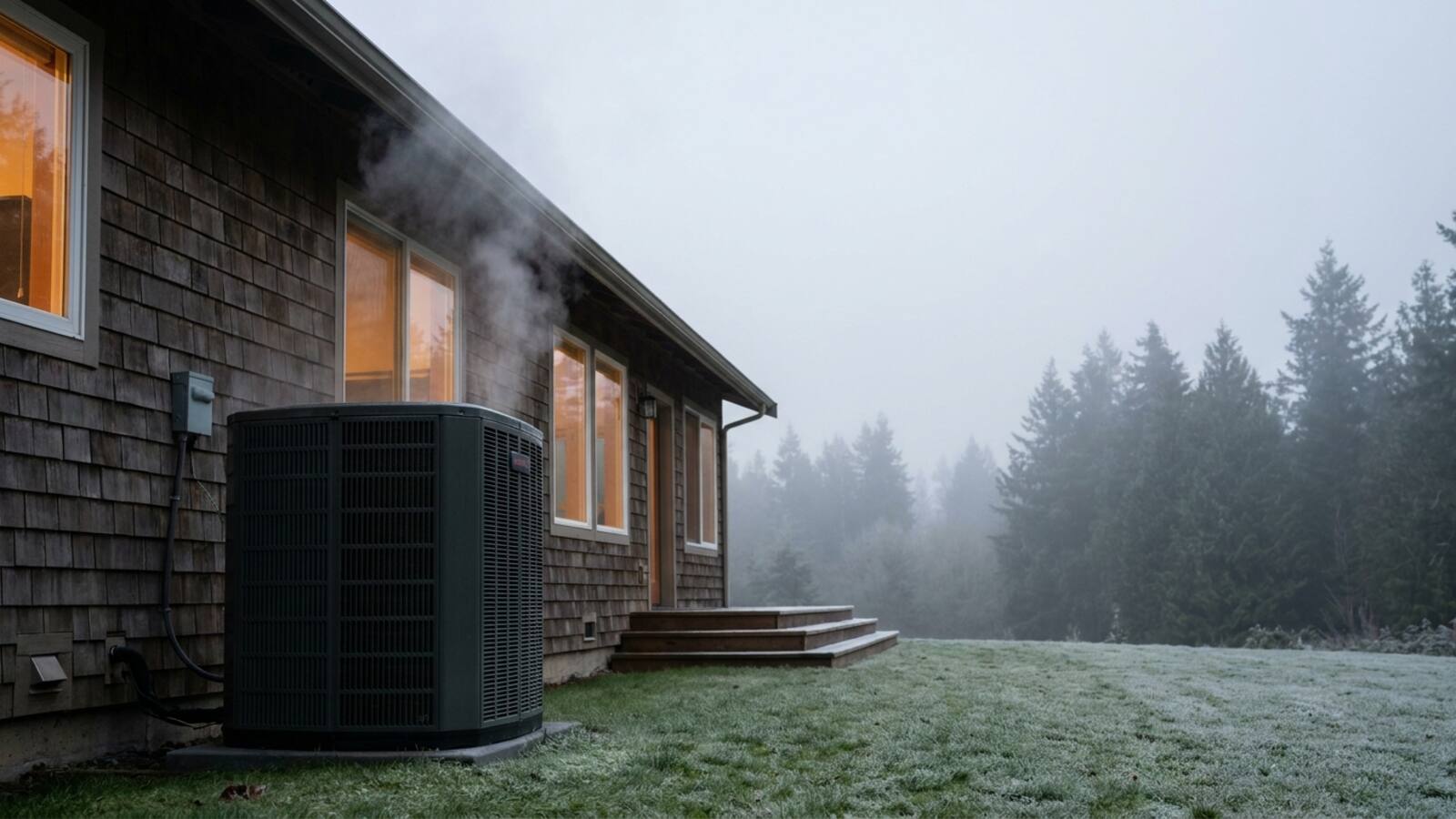
This one generates more worried phone calls than any actual breakdown. On a cold, damp morning — which describes most Puget Sound winter mornings — frost builds up on the outdoor coil. The system knows, and it runs a defrost cycle: it briefly reverses direction, warms the coil, melts the frost, and gets back to heating. During those few minutes you'll see a dramatic cloud of steam rolling off the unit and feel the indoor air go neutral or slightly cool.
None of that is a malfunction. Steam is melted frost evaporating. The pause is the system taking care of itself. Our damp marine air means Western Washington heat pumps defrost more visibly than units in dry climates — it's a sign the system is doing exactly what it should.
When should you worry? When ice wins. If the outdoor unit stays caked in thick ice for hours, if the coil looks like an ice sculpture that never melts, or if the fan blades are frozen in place — the defrost cycle isn't keeping up, and that usually points to a refrigerant issue, a failed sensor, or a drainage problem. That's a real service call: our heat pump repair team handles exactly this, and catching it early is the difference between a small fix and a compressor replacement.
Does Sizing Matter More in Winter?
Yes — winter is when sizing mistakes come out of hiding. A heat pump that's sized wrong can limp through a mild October, but a January cold snap exposes everything:
- Undersized systems run flat-out and still fall behind on the coldest nights — then lean on electric auxiliary heat, which is the expensive way to make heat. Your comfort survives; your bill doesn't.
- Oversized systems blast, satisfy the thermostat, and shut off — over and over. Short cycling means temperature swings, more defrost cycles, more wear on the compressor, and a shorter equipment life. Bigger is not safer.
The fix is boring and non-negotiable: a real load calculation before anyone quotes you a system. That means measuring your home's actual heat loss — insulation, windows, air sealing, orientation, ductwork — not eyeballing square footage and rounding up. A contractor who sizes your system off a glance at your house is guessing with your money. We run the calculation on every job, because a right-sized system is the entire foundation of winter performance.
What Do PNW Homeowners Actually Experience?
Strip away the theory and here's what changes after a heat pump goes in:
- Lower bills — dramatically lower if you're leaving electric resistance heat. Homeowners replacing baseboards, wall heaters, or an electric furnace typically cut heating costs 30% to 50%. That's the same physics from earlier: moving heat costs a fraction of making it.
- Even, steady warmth. A variable-speed heat pump runs low and long instead of blasting and stopping. No more roaring-furnace-then-chilly-hallway cycle — rooms hold temperature instead of swinging around it.
- Cooling comes in the same box. The unit that heats your home in January air conditions it in August — and Puget Sound summers have made that a real benefit, not a footnote. One system, one maintenance schedule, both seasons covered.
What a heat pump costs to buy and run is its own conversation with real numbers — we published the full 2026 breakdown in our Washington heat pump cost guide, including the local utility rebates that bring the price down for qualifying conversions.
Should Anyone in Our Area Not Get a Heat Pump?
Honesty is the brand, so here's the short list of homes where we'd pump the brakes:
Foothill microclimates. Not every address in our service area gets the full marine-blanket effect. Towns up against the Cascade foothills — Enumclaw and Buckley are the usual suspects — sit higher, catch colder air, and see more freezing nights than Federal Way or Tacoma. A heat pump still works there; the honest conversation is whether a cold-climate unit or a hybrid with gas backup is the smarter spec. That's a sizing-and-selection question, not a reason to skip the technology.
Homes with failing ductwork. A ducted heat pump is only as good as the ducts behind it. If yours are leaky, crushed, or undersized, a new heat pump will push expensive warm air into your crawlspace. Fix the ducts first — or fix them as part of the project — and the system you pay for is the system you actually get. Bolting new equipment onto broken ductwork is the one version of this purchase we'll talk you out of.
That's the list. For the typical Puget Sound home — ducted or ductless, Auburn or Olympia — the winter question was answered years ago. Heat pumps don't merely survive Washington winters. This climate is where they do their best work.
Heat Pumps in Winter FAQs
Yes. Modern heat pumps deliver full heating capacity well below freezing, and cold-climate models are rated to keep heating below 0°F. In Western Washington — where typical winter lows sit in the 30s and temperatures rarely drop below 25°F — a properly sized heat pump handles the entire season without breaking a sweat.
It doesn't shut off at some cliff — output declines gradually as temperatures fall. Standard units heat effectively into the low 20s, cold-climate models keep producing heat below 0°F, and auxiliary electric heat covers anything beyond that. Puget Sound winters almost never test those limits.
That's the defrost cycle, and it's normal. In cold, damp weather frost forms on the outdoor coil, so the unit briefly reverses to melt it — producing a cloud of steam and a short pause in heating. If the outdoor unit stays caked in thick ice for hours, that's a real problem worth a repair call.
Most Puget Sound systems include electric auxiliary heat as built-in insurance, and most homeowners rarely see it run. Homes in colder foothill areas like Enumclaw or Buckley see more freezing nights, so a hybrid setup — heat pump plus gas furnace backup — is worth discussing there.
Homeowners replacing electric resistance heat — baseboards, wall heaters, or an electric furnace — typically cut heating costs 30% to 50%. A heat pump also replaces your air conditioner, so one system covers both heating and cooling with a single maintenance schedule.