
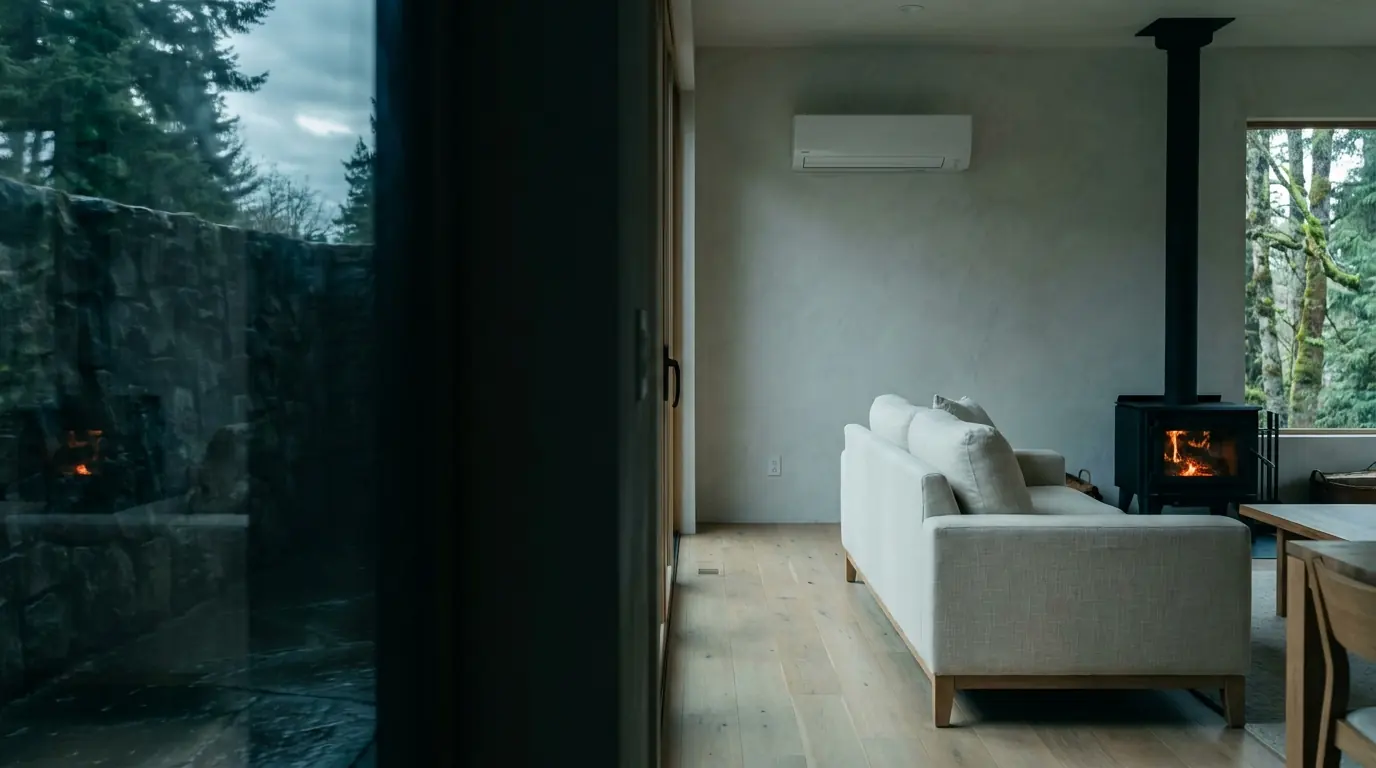
Mini-Split Installation in Seattle, WA
Ductless heating and cooling for Capitol Hill, Ballard, West Seattle, and neighborhoods across the Emerald City. Mitsubishi, Daikin, and Hitachi systems installed by our own technicians. Served by Seattle City Light, not the utility most rebate articles assume.
Why Seattle Homeowners Are Choosing Ductless Mini-Splits
Seattle's diverse housing stock makes ductless mini-splits the ideal comfort solution for thousands of homeowners across the city. From the classic Craftsman bungalows of Ballard and Capitol Hill to the mid-century ranches in Rainier Valley and the modern townhomes reshaping Queen Anne, many Seattle homes were built without central ductwork or have layouts that make traditional HVAC systems impractical.
Seattle is the one city in our area where the money is in getting off oil, not off gas — and Seattle City Light runs its own program, so the rebate tables written for the rest of the region do not apply to you. The bonus tier closes for installs completed after September 30, 2026, so here the calendar matters as much as the paperwork.
The Washington State Energy Code lists Seattle at a 24°F winter design temperature (WAC 51-11C-80100, Table C-1). That is the number a Manual J load calculation for your home is run against, and it is the difference between equipment that carries the house on its own and equipment that leans on expensive backup heat every cold snap. Natural gas here comes from the local gas utility. In Seattle we most often find oil furnaces and gravity "octopus" furnaces in pre-1940 Craftsman and Tudor stock, gas forced air in remodeled homes, and electric wall heaters in un-ducted bungalows — so we quote what your house actually has, not what the average Puget Sound home has.
1,000+
Projects completed across the Puget Sound region
24°F
Winter design temperature the state energy code sets for Seattle
Mini-Split Services in Seattle
Why Choose a Local Seattle Installer
Fast Response
Based in Federal Way with crews serving Seattle daily. We arrive on time and most single-zone installations are completed the same day.
Know Local Codes
The mechanical permit for your mini-split is issued by Seattle Department of Construction & Inspections (SDCI). We pull it, pay the fee, book the inspection and meet the inspector on site. Exterior work in Seattle may also go before the Seattle Landmarks Preservation Board and the neighborhood historic districts (Ballard Avenue, Columbia City, Pioneer Square, Harvard-Belmont).
Understand Local Homes
In Seattle we usually find oil furnaces and gravity "octopus" furnaces in pre-1940 Craftsman and Tudor stock, gas forced air in remodeled homes, and electric wall heaters in un-ducted bungalows. We size to your house at the 24°F design temperature the state energy code sets for this area — not to a rule of thumb. Near Elliott Bay and Shilshole Bay we specify corrosion-rated coils.
Local details that change a mini-split job in Seattle
Seattle is not on the utility most heat pump rebate advice on the internet assumes, which quietly invalidates it. The facts below are the ones that actually apply to your meter.
- Electric utility
- Seattle City Light
- Natural gas
- the local gas utility
- Winter design temp
- 24°F WSEC Table C-1, WAC 51-11C-80100
- Mechanical permit
- Seattle Department of Construction & Inspections (SDCI)
- Rebate program that applies
- Seattle's Clean Heat program
- Burn bans & smoke advisories
- Puget Sound Clean Air Agency
- Heat we usually find
- oil furnaces and gravity "octopus" furnaces in pre-1940 Craftsman and Tudor stock, gas forced air in remodeled homes, and electric wall heaters in un-ducted bungalows
- Salt-air exposure
- Elliott Bay and Shilshole Bay — corrosion-rated equipment recommended
- Design / historic review
- the Seattle Landmarks Preservation Board and the neighborhood historic districts (Ballard Avenue, Columbia City, Pioneer Square, Harvard-Belmont)
"The installation went very smoothly from start to finish and their craftsmanship is phenomenal."
Mini-Split FAQ for Seattle Homeowners
A ductless mini-split installation in Seattle typically costs between $9,200 and $16,800 depending on the number of zones, system capacity, and installation complexity. Older Craftsman homes in Capitol Hill or Ballard may require additional mounting considerations that can affect final pricing. We provide free in-home estimates with transparent, upfront pricing.
Yes. The mechanical permit is issued by Seattle Department of Construction & Inspections (SDCI), and Washington State requires one for this work. We handle the whole thing — application, fee, and meeting the inspector for the final — so you never contact the permit desk yourself. In Seattle, exterior equipment may additionally need sign-off from the Seattle Landmarks Preservation Board and the neighborhood historic districts (Ballard Avenue, Columbia City, Pioneer Square, Harvard-Belmont), which we factor into placement before we quote. Every install meets or exceeds the current Washington State mechanical and energy codes.
Absolutely. Mini-splits are one of the best solutions for Seattle's Craftsman bungalows and older homes that lack existing ductwork. They provide efficient heating and cooling without the cost and disruption of installing a full duct system through historic walls and ceilings. The wall-mounted units require only a small hole for the refrigerant line, preserving your home's character.
Seattle is served by Seattle City Light, so the program that applies to your home is Seattle's Clean Heat program: a $2,000 instant rebate for oil-to-heat-pump conversions on qualifying equipment, plus up to $4,000 more for moderate-income households (81–150% AMI) on installs completed by Sept 30, 2026. Rebate programs change, and eligibility turns on your existing heating system, the equipment's efficiency rating and sometimes your household income — we confirm what you actually qualify for before it goes in your quote, and we file the paperwork after the install. The federal 25C tax credit expired on December 31, 2025, so do not budget around it.
Most single-zone mini-split installations in Seattle are completed in one day. Multi-zone systems serving multiple rooms in larger homes or townhomes in Queen Anne or Rainier Valley typically take one to two days depending on the number of indoor units and installation complexity.
The Washington State Energy Code lists Seattle at a 24°F winter design temperature (WAC 51-11C-80100, Table C-1). That is the number a Manual J load calculation for your home is run against, and it is the difference between equipment that carries the house on its own and equipment that leans on expensive backup heat every cold snap. A cold-climate heat pump holds its rated capacity well below that, which is why heat pumps genuinely work here rather than being a compromise. Gas here comes from the local gas utility, and for some homes a hybrid — heat pump for most of the year, gas furnace for the coldest mornings — is the right answer. We will tell you if it is.
Ready for a Mini-Split Estimate in Seattle?
Get a free quote for ductless mini-split installation in your Seattle home. Most installs completed in one day.